
Main content blocks
Section outline
-

Introduction
This module aims to equip first-year university student-teachers in Rwanda with foundational pedagogical knowledge and skills for effective teaching and learning. It explores student typologies, key pedagogical concepts, and major learning theories with their classroom applications. The module further examines principles, methods, styles, strategies and techniques of teaching within the framework of Rwanda’s Competence-Based Curriculum (CBC). Emphasis is placed on instructional planning, lesson delivery, classroom management, and assessment aligned with CBC objectives. Finally, the module highlights gender-responsive and inclusive pedagogy to foster equity and address diverse learner needs.
Module Learning Outcomes
By the end of this module, you should be able to:
- Analyze first year student – teachers’ perceptions about the teaching profession for better reflection on their impact on future teaching roles and practices.
- Explain key pedagogical concepts, and components of effective teaching and learning for effective application in diverse teaching and learning situations.
- Differentiate theories of learning and their classroom applications in different classroom contexts.
- Design competence-based lessons and assessment using appropriate taxonomies of educational objectives for effective Teaching and Learning.
- Deliver effective lessons by implementing gender-responsive and inclusive pedagogy using Rwandan curriculum frameworks.
Module facilitators
Name
Phone Number
Email Address
Dr. Delphine Mukingambeho (Module Leader)
0788470872
Mr. Valens Ngarukiye
0788636809
Mrs. Mariane Uwamariya
0788580671
Mr. Pontien Macumi
0788743249
Mr. Raymond Mwesigye
0788308958
Dr. Barthelemy Bizimana
0788402511
Mr. Froduald Ndayambaje
0788444396
Dr. Jean Baptiste Ndagijimana
0874014094 / 0788472033
Mr. Jean Claude Ndagijimana (Deputy Module Leader)
0788572461
Assoc. Prof. Gabriel Nizeyimana
0783715674
Mr. Sam Katongole
0788743073
Mr. Dieudonné Tuyishime
0788743891
Mr. Ali Kaleeba
0788857086
Mrs. Françoise Mujawimana
0788896769
Mr. Kamanzi Francis
0788641183
Mr. Alicadi Kamanzi
0788616744
-
Introduction
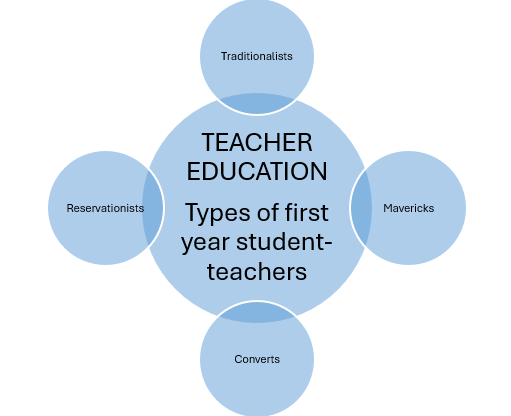
This unit introduces the diverse profiles of first-year university student-teachers in Rwanda, emphasizing how their prior experiences, beliefs, motivations, and attitudes shape their transition into teacher education. Understanding these typologies is essential for enhancing teaching, learning, and professional development within teacher training institutions. The unit focuses on four main categories of student-teachers: Traditionalists, mavericks, converts, reservationists. By examining these typologies, the unit aims to help you better understand individual differences in learning and professional identity formation.
Unit Learning Outcomes:
By the end of unit 1, you should be able to:· Categorize first year student – teachers’ perceptions about the teaching profession for better reflection on their impact on future teaching roles and practices.
· Analyze the characteristics of first-year student teachers’ types in the Rwandan teacher education.
· Explain the implications of first-year student teachers’ characteristics for classroom teaching and learning practices in Rwanda
-
Opened: Thursday, 7 May 2026, 12:00 AMDue: Monday, 25 May 2026, 12:00 AM
-
Students mustMark as done
Instructions
Welcome to end of unit 1 assessment on Typology of first year university student- teachers in Rwanda !
-
Quiz Format: This quiz consists of 20 multiple-choice questions. Each question has four options, labeled A, B, C, and D. Only one option is correct for each question.
-
Answering Questions: Select the correct answer by clicking on the corresponding option. Make sure to review your answers before submitting the quiz.
-
Time Limit: You have 30 minutes to complete the quiz. The timer will start as soon as you begin the quiz. Ensure you manage your time effectively.
-
Scoring: Each question is worth 1 point. The final grade is out of 20, where pass mark is 10/20
-
Submission: Once you have answered all the questions, click the "Submit" button to finalize your quiz. You will not be able to change your answers after submission.
-
Feedback: You will receive feedback on your performance once the quiz is closed. You will review the feedback to understand your strengths and areas for improvement., If you are not satisfied with your grades, read the materials to understand better.
-
Academic Integrity: Please complete the quiz independently. Do not use any external resources or collaborate with others. Academic honesty is expected and valued.
-
-
Introduction
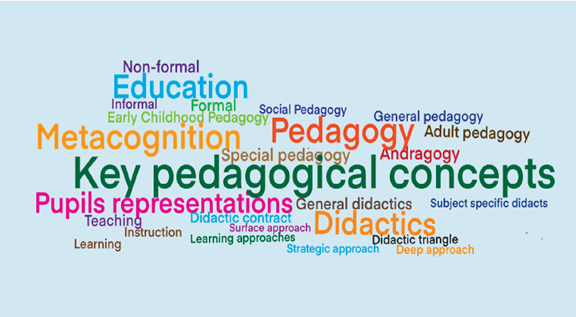
This unit introduces you to key pedagogical concepts that underpin effective teaching and learning in contemporary education. It explores the meaning and branches of pedagogy, the different forms of education, and the concepts of teaching, instruction, and learning. The unit further examines major learning approaches and foundational didactic principles, including the didactic triangle, didactic contract, and didactic transposition, as essential frameworks for classroom practice. In addition, it highlights teacher professional standards in Rwanda as benchmarks for quality teaching, while emphasizing the importance of understanding pupils’ prior representations and promoting metacognition to enhance meaningful learning. Together, these concepts provide a comprehensive foundation for developing reflective, competent, and learner-centered teachers.
Unit Learning outcomes:
By the end of this unit, you should be able to:
· Differentiate key pedagogical concepts within formal education settings
· Explain the components and significance of the didactic triangle in classroom teaching situations
· Analyse the role of metacognition and learners’ prior representations in the teaching and learning process
· Discuss teacher professional standards in relation to pedagogical practices within the Rwandan education system.
-
-
Students mustMark as done
Instructions
Welcome to the end of unit 2 assessment on Key Pedagogical Concepts! Please read the following instructions carefully before you begin:
-
Quiz Format: This quiz consists of 132 multiple-choice questions. Each question has four options, labeled A, B, C, and D. Only one option is correct for each question.
-
Answering Questions: Select the correct answer by clicking on the corresponding option. Make sure to review your answers before submitting the quiz.
-
Time Limit: You have 90 minutes to complete the quiz. The timer will start as soon as you begin the quiz. Ensure you manage your time effectively.
-
Scoring: Each question is worth 1 point. There is no negative marking for incorrect answers.
-
Submission: Once you have answered all the questions, click the "Submit" button to finalize your quiz. You will not be able to change your answers after submission.
-
Feedback: You will receive feedback on your performance once the quiz is closed. Review the feedback to understand your strengths and areas for improvement., If you are not satisfied with your grades, read the materials again then repeat the quiz.
-
Academic Integrity: Please complete the quiz independently. Do not use any external resources or collaborate with others. Academic honesty is expected and valued.
-
-
Introduction
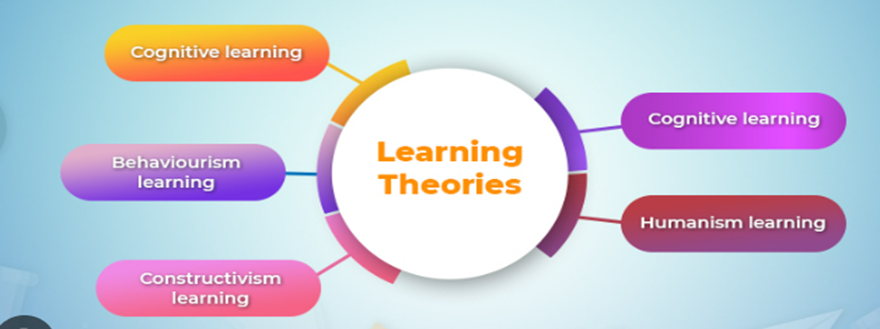
Unit 3 explores various learning theories and their application in the teaching/learning process. Theories of learning are frameworks that explain how individuals acquire, process, and retain knowledge and skills. There are many theories of learning, but this unit focuses on the six theories including behaviorism with emphasis on classical conditioning and operant conditioning, cognitivism, constructivism, socio-constructivism, socio-cultural theory and social learning theoryLearning outcomes
By the end of this unit, you will be able to:
•Describe the theories of learning to gain a deeper understanding of the learning process.•Analyze the application of learning theories in diverse T/L contexts to ensure effective teaching and learning.•Apply learning theories in T/L contexts to foster student engagement, motivation, and achievement.-
-
Opened: Friday, 14 March 2025, 5:00 PMClosed: Saturday, 26 April 2025, 8:00 PMStudents mustMark as done
Instructions
Welcome to the quiz on Theories of learning and their applications in the teaching and learning process! Please read the following instructions carefully before you begin:
Quiz Format: This quiz consists of 212 multiple-choice questions. Each question has four options, labeled A, B, C, and D. Only one option is correct for each question.
Answering Questions: Select the correct answer by clicking on the corresponding option. Make sure to review your answers before submitting the quiz.
Time Limit: You have 120 minutes to complete the quiz. The timer will start as soon as you begin the quiz. Ensure you manage your time effectively.
Scoring: Each question is worth 1 point. There is no negative marking for incorrect answers.
Submission: Once you have answered all the questions, click the "Submit" button to finalize your quiz. You will not be able to change your answers after submission.
Feedback: You will receive feedback on your performance once the quiz is closed. Review the feedback to understand your strengths and areas for improvement., If you are not satisfied with your grades, read the materials again then repeat the quiz.
Academic Integrity: Please complete the quiz independently. Do not use any external resources or collaborate with others. Academic honesty is expected and valued.
-
-
Introduction
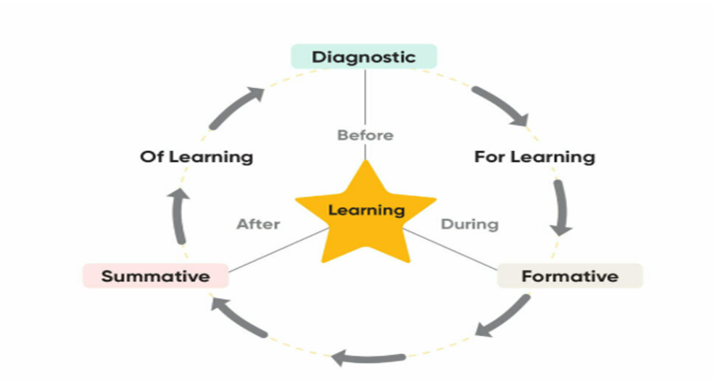
Assessment and evaluation are integral parts of the teaching and learning process, helping to measure and improve student learning while also guiding teaching strategies. Though they are often used interchangeably, the two terms are different. This unit differentiates the two concepts, discuss types, strategies, approaches and principles of assessment. It clarifies the importance of assessment in the teaching and learning process, types of assessment questions, their advantages and diasdvantages.
Learning outcomes
By the end of this lesson, you should be able to:
- Differentiate the concepts of assessment and evaluation, assessment types, strategies, approaches, and principles.
- Discuss the importance of assessment in the teaching and learning process and the advantages and disadvantages of assessment question types.
- Assess students’ learning using various types of assessment questions.
-
-
Opened: Friday, 2 May 2025, 4:00 AMClosed: Monday, 5 May 2025, 11:55 PMStudents mustMark as done
Welcome to the quiz on Assessment in the teaching and learning process! Please read the following instructions carefully before you begin:
Quiz Format: This quiz consists of 151 multiple-choice questions. Each question has four options, labeled A, B, C, and D. Only one option is correct for each question.
Answering Questions: Select the correct answer by clicking on the corresponding option. Make sure to review your answers before submitting the quiz.
Time Limit: You have 120 minutes to complete the quiz. The timer will start as soon as you begin the quiz. Ensure you manage your time effectively.
Scoring: Each question is worth 1 point. There is no negative marking for incorrect answers.
Submission: Once you have answered all the questions, click the "Submit" button to finalize your quiz. You will not be able to change your answers after submission.
Feedback: You will receive feedback on your performance once the quiz is closed. Review the feedback to understand your strengths and areas for improvement., If you are not satisfied with your grades, read the materials again then repeat the quiz.
Academic Integrity: Please complete the quiz independently. Do not use any external resources or collaborate with others. Academic honesty is expected and valued.
-

Introduction
Gender Responsive and Inclusive Pedagogy is an educational approach that aims to create an equitable learning environment by addressing and integrating gender considerations into teaching practices. This approach ensures that all students, regardless of their gender, have equal opportunities to participate and succeed in their education. The unit explains key terms related to gender and inclusive pedagogy and describe the principles, strategies, benefits and barriers to gender responsive and inclusive pedagogy with a focus to the case of Rwanda.
Unit Learning Outcomes
By the end of this unit, you should be able to:
- Explain key terms related to gender and inclusive pedagogy to address gender biases and foster inclusive in your teaching practices.
- Describe the principles, strategies, benefits and barriers to gender responsive and inclusive pedagogy
- Apply gender responsive and inclusive pedagogy in the teaching and learning process to foster a successful learning environment.
-
-
Opened: Monday, 5 May 2025, 5:00 PMClosed: Wednesday, 7 May 2025, 3:25 PMStudents mustMark as done
Welcome to the quiz on gender responsive and inclusive pedagogy! Please read the following instructions carefully before you begin:
Quiz Format: This quiz consists of 123 multiple-choice questions. Each question has four options, labeled A, B, C, and D. Only one option is correct for each question.
Answering Questions: Select the correct answer by clicking on the corresponding option. Make sure to review your answers before submitting the quiz.
Time Limit: You have 100 minutes to complete the quiz. The timer will start as soon as you begin the quiz. Ensure you manage your time effectively.
Scoring: Each question is worth 1 point. There is no negative marking for incorrect answers.
Submission: Once you have answered all the questions, click the "Submit" button to finalize your quiz. You will not be able to change your answers after submission.
Feedback: You will receive feedback on your performance once the quiz is closed. Review the feedback to understand your strengths and areas for improvement., If you are not satisfied with your grades, read the materials again then repeat the quiz.
Academic Integrity: Please complete the quiz independently. Do not use any external resources or collaborate with others. Academic honesty is expected and valued.
-
Introduction
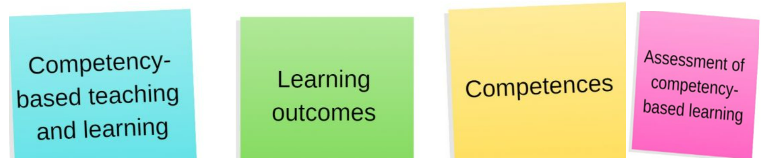
Curriculum is the vehicle through which a country empowers its citizens with the necessary knowledge, skills, attitudes, and values that enable them to be empowered for personal and national development. Therefore, it should meet the needs of the individual citizens and the nation. This unit explores the meaning of CBC, and its history. It particulary discusses the CBC in Rwanda with a focus on its rationale, generic competences, crosscutting issues and competence- based assessments as well as opportunities, challenges and mitigation strategies of CBC implementation in Rwanda.
Unit Learning Outcomes
By the end of this unit, you should be able to :
- Explain the meaning of CBC, its history, principles and the rationale for CBC in Rwanda for its effective implementation in the teaching and learning process.
- Address generic competences, integrate crosscutting issues and conduct competence- based assessments while teaching to ensure effective teaching and learning practices.
- Discuss opportunities, challenges and mitigation strategies of CBC implementation in for better understanding of the practical aspects of implementing CBC in Rwanda.
-
-
-
Opened: Friday, 23 May 2025, 12:59 PMClosed: Sunday, 25 May 2025, 11:59 PMStudents mustMark as done
Welcome to the quiz on Competence Based Curriculum in Rwanda! Please read the following instructions carefully before you begin:
Quiz Format: This quiz consists of 59 multiple-choice questions. Each question has four options, labeled A, B, C, and D. Only one option is correct for each question.
Answering Questions: Select the correct answer by clicking on the corresponding option. Make sure to review your answers before submitting the quiz.
Time Limit: You have 50 minutes to complete the quiz. The timer will start as soon as you begin the quiz. Ensure you manage your time effectively.
Scoring: Each question is worth 1 point. There is no negative marking for incorrect answers.
Submission: Once you have answered all the questions, click the "Submit" button to finalize your quiz. You will not be able to change your answers after submission.
Feedback: You will receive feedback on your performance once the quiz is closed. Review the feedback to understand your strengths and areas for improvement., If you are not satisfied with your grades, read the materials again then repeat the quiz.
Academic Integrity: Please complete the quiz independently. Do not use any external resources or collaborate with others. Academic honesty is expected and valued.
-
Background Colour
Font Face
Font Kerning
Font Size
Image Visibility
Letter Spacing
Line Height
Link Highlight
Text Alignment
Text Colour