
Dear student,
Kindly engage with the learning materials of unit 2.
2. Concept of pedagogy
Activity
 Meaning of Pedagogy
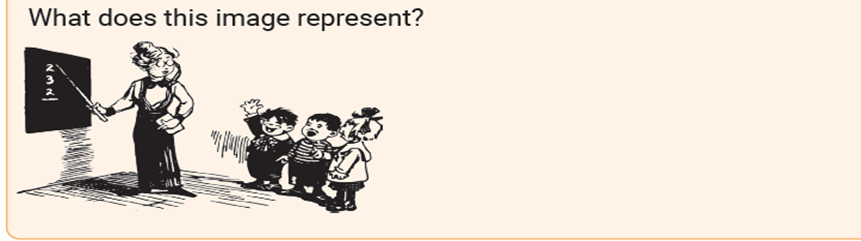
The word pedagogy comes from the Greek word "paidagōgia“,which is derived from two words: "pais", meaning "child" and "agōgos" meaning "leader" or "guide" (from the verb "agō", meaning "to lead" or "to bring"). Agogos is derived from the verb " ageirō ", which means "to lead “. Agogos refers to someone who leads, directs, or guides others, especially in the context of learning, teaching, or social movements. "Paidagōgia" literally means "the act of leading a child" or "the practice of guiding children.“
In ancient Greece, a paidagōgos was a slave or servant responsible for escorting and supervising the education of children. So, historically, the word pedagogy refers to a person who leads aactual implementation of teaching in real classroom situations. It involves what teachers do daily planning lessons, choosing teaching methods, interacting with learners, assessing progress, and managing the classroom. This is where theory and creativity come together and are applied in a specific context, such as a secondary school in Rwanda.
In essence, the definition shows that pedagogy integrates:
- Art → how creatively and skillfully teaching is delivered
- Science → the knowledge and theories that inform teaching
- Practice → the real-life application in the classroom
Together, these dimensions ensure that teaching is effective, informed, and responsive to learners’ needs. child, but this leader was not the “teacher”. The “pedagogue” was a slave who led a male child to school in the morning and then back home again in the afternoon.
Over time, the term slave evolved to refer more broadly to the theory and practice of education, not just the supervision of children.
Today, pedagogy refers to the art, science, and practice of teaching. This means that pedagogy is not just about teaching, it is a comprehensive concept that combines creativity, knowledge, and action in the teaching process.
When we say pedagogy is an art, we are emphasizing the teacher’s creativity, intuition, and personal skill in the classroom. Teaching is not mechanical; it requires the ability to explain ideas clearly, motivate learners, adapt to different abilities, and create an engaging learning environment. For example, a teacher may use storytelling, humor, or real-life examples to make a lesson more meaningful. These are artistic elements because they depend on the teacher’s style and judgment.
When pedagogy is described as a science, it highlights that teaching is based on systematic knowledge, research, and established theories about how people learn. Educational practices are informed by fields such as Educational Psychology and learning theories like Constructivism, which explain how learners process information and develop understanding. This means effective teaching is not guesswork; it relies on evidence-based methods such as reinforcement, feedback, and cognitive development principles.
Finally, pedagogy as a practice refers to the actual implementation of teaching in real classroom situations. It involves what teachers do daily planning lessons, choosing teaching methods, interacting with learners, assessing progress, and managing the classroom. This is where theory and creativity come together and are applied in a specific context, such as a secondary school in Rwanda.
In essence, the definition shows that pedagogy integrates:
- Art → how creatively and skillfully teaching is delivered
- Science → the knowledge and theories that inform teaching
- Practice → the real-life application in the classroom
Together, these dimensions ensure that teaching is effective, informed, and responsive to learners’ needs.
Pedagogy encompasses the methods, strategies, theories and principles that teachers use to facilitate learning, considering both what is taught and how it is taught, particularly in formal educational settings, especially the teaching children or young learners. Pedagogy involves understanding learners’ needs, designing appropriate learning experiences, and creating supportive learning environments that promote meaningful engagement and development. Pedagogy implies the science of the child (psychology), the knowledge of educational techniques and the art to put them into practice (pedagogy itself).
Pedagogy often focuses on foundational knowledge, skills, and behaviors that learners need for future learning. Pedagogy has a broader scope including educational philosophy, learner psychology, and classroom management (Shah and Campus, 2021). In a more detailed sense, pedagogy includes:
- Teaching methods (e.g., lecture, discussion, cooperative learning)
- Instructional strategies tailored to learners’ needs
- Classroom management techniques
- Assessment and evaluation practices
- Understanding of how students learn (educational psychology and developmental stages).
Effective pedagogy is not just about delivering content. It is about engaging learners, fostering critical thinking, and creating inclusive and supportive learning environments.