
Unit 2: Grid Terms and Concepts Summary
1. Understanding the Meaning of a Grid
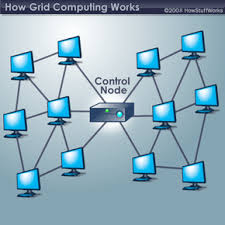
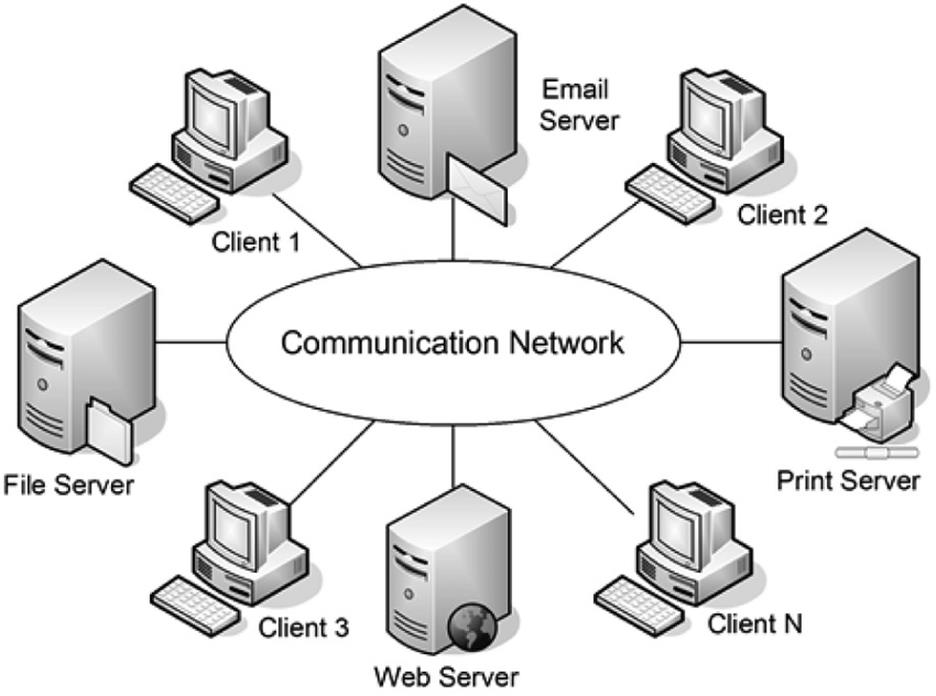
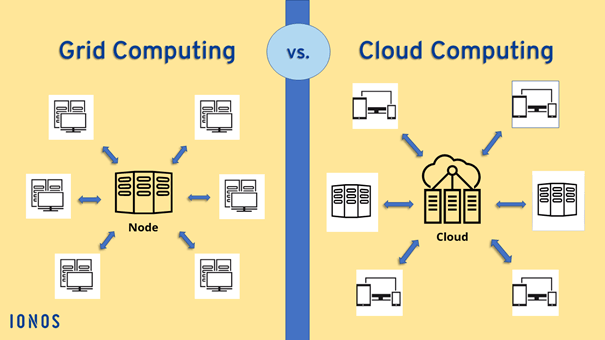
A grid is defined as a collection of interconnected machines that cooperate by sharing resources. These machines are often called nodes, hosts, or members, but regardless of the name, their purpose is the same: to contribute capabilities to a larger system.
The key idea is resource pooling. Instead of relying on one powerful computer, a grid combines many smaller systems to behave like a unified computational environment. Some resources may be shared freely across all users, while others may be restricted according to policies or ownership rules.
This structure allows organizations to solve problems that exceed the capacity of individual machines.
2. Computation as the Primary Resource
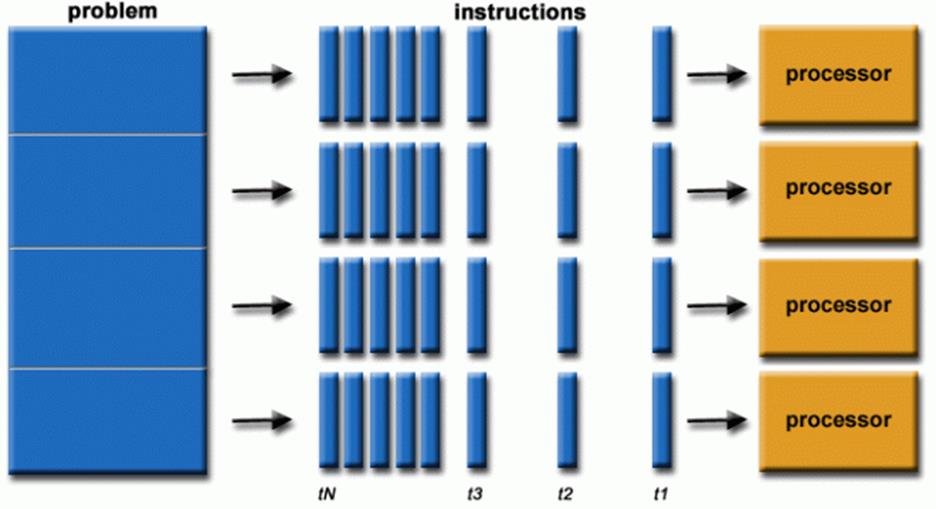
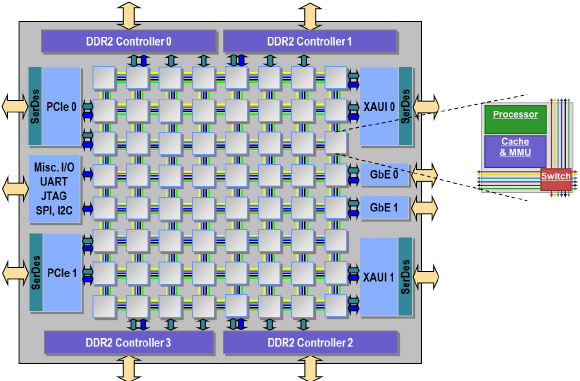
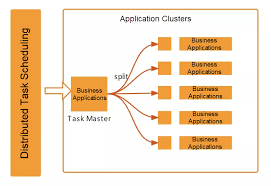
The most commonly shared resource in a grid is processing power. Each participating machine contributes CPU cycles, even though processors may differ in speed, architecture, or operating system.
Grids exploit computational power in three important ways.
First, an application can be executed on a remote grid machine instead of running locally. This allows users to access stronger hardware when needed.
Second, applications can be divided into smaller tasks that run simultaneously on different machines. This is known as parallel execution and significantly reduces completion time.
Third, applications that must run repeatedly can be distributed across many machines, enabling high-throughput processing.
The effectiveness of this distribution is measured by scalability. A system is considered scalable if adding more processors leads to proportional performance improvement. However, scalability is often limited by communication overhead and task dependencies.
3. Storage and the Emergence of the Data Grid
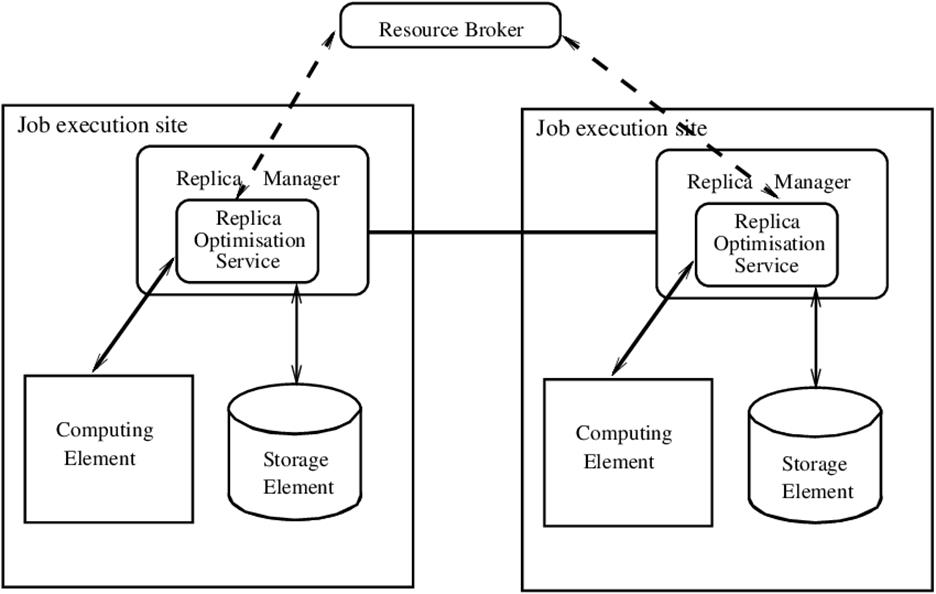
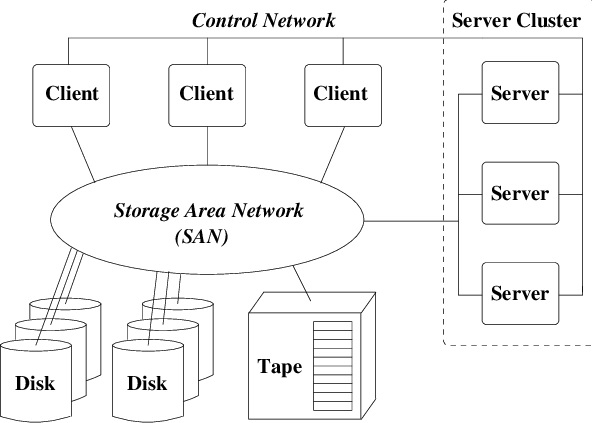
Storage is the second major resource contributed by grid machines. When storage from multiple systems is integrated into a unified structure, the result is called a data grid.
Each node may provide temporary memory or long-term secondary storage such as hard disks. Fast processor-attached memory is useful for caching and short-term computation, while secondary storage supports persistence and large datasets.
Grid file systems unify these distributed storage locations into a single accessible namespace. Users can access files without needing to know their physical location.
Techniques such as data striping distribute parts of a file across several disks, allowing faster data transfer and supporting data-intensive applications like scientific experiments or medical imaging.
4. Communication: The Enabling Infrastructure
Communication capacity is essential because jobs and data must continuously move between machines. Without high-bandwidth connectivity, processors would remain idle while waiting for data.
Internal communication allows jobs to be assigned and executed efficiently across the grid. External connectivity, such as Internet access, enables grids to gather or distribute information globally.
Redundant communication paths improve reliability and help manage heavy data traffic. In many grid environments, network performance becomes a limiting factor rather than processor speed.
5. Software, Licensing, and Specialized Resources
Grids often include specialized software that is too expensive to install everywhere. Instead of duplicating installations, the grid sends jobs to machines where the required software is already available.
License management systems control how many copies of software run simultaneously, ensuring compliance while maximizing utilization.
In addition to software, grids must handle heterogeneous environments. Machines may differ in architecture, operating systems, or attached devices. These differences are treated as resource characteristics that influence how jobs are assigned.
Administrative policies may further restrict usage. For example, certain machines may be designated only for specific research domains, ensuring compliance with organizational or ethical requirements.
6. Jobs and Applications as Units of Work
Resources in a grid are accessed through applications, which are divided into executable jobs. A job represents a specific unit of work scheduled to run on a suitable machine.
Applications may consist of many jobs running in parallel, or they may follow dependency chains where one job must complete before another begins.
Jobs can also generate subjobs, forming hierarchical workflows. After execution, outputs from all jobs are collected and assembled into the final result.
This structure allows large problems to be decomposed into manageable computational tasks.
7. Scheduling, Reservation, and Scavenging Mechanisms
The grid management system determines where and when jobs are executed.
Scheduling refers to the automated selection of machines based on resource availability and job requirements. Advanced schedulers evaluate multiple factors, including proximity to data and current workload, often using heuristic methods to approximate optimal decisions.
Reservation allows resources to be booked in advance to guarantee completion deadlines or quality of service. This approach introduces predictability into grid execution.
Scavenging, by contrast, uses idle machines opportunistically. When a machine becomes free, it temporarily executes grid jobs. If the local user resumes activity, the grid job is paused. This method maximizes utilization but produces less predictable execution times.
8. Grid Software Components and Management
Grid environments rely on management software to coordinate operations. These components monitor resources, dispatch jobs, enforce policies, and handle failures.
While early grids required manual configuration, modern systems aim to automate these responsibilities, creating self-managing infrastructures capable of adapting dynamically to workload changes.
9. Intragrid and Intergrid Structures
Grids vary in size and complexity.
A small grid composed of similar machines within one department resembles a cluster. Homogeneity simplifies management and application deployment.
An intragrid connects heterogeneous systems across departments within the same organization. This configuration introduces scheduling, access policies, and shared governance.
An intergrid extends across organizational boundaries, enabling collaboration among geographically distributed institutions. Such environments demand stronger security, standardized protocols, and coordinated resource sharing.
10. Central Insight of the Unit
Unit 2 establishes that grid computing is not defined merely by connecting machines, but by organizing diverse resources into a coordinated infrastructure.
The grid transforms independent systems into a collaborative environment capable of large-scale computation, storage integration, and distributed problem solving. Achieving this requires careful management of scalability, communication, scheduling, and policy enforcement.
11. Concluding Perspective
The concepts introduced in this unit form the conceptual foundation of grid computing. They explain how computation, storage, communication, and management mechanisms interact to create a system that is more powerful collectively than any of its individual components.
Understanding these relationships is essential for interpreting real-world distributed systems and for designing infrastructures that efficiently utilize shared technological resources.