
Benefits of grid computing
7. Management
The goal to virtualize the resources on the grid and more uniformly handle heterogeneous systems will create new opportunities to better manage a larger, more distributed IT infrastructure. It will be easier to visualize capacity and utilization, making it easier for IT departments to control expenditures for computing resources over a larger organization.
The grid offers management of priorities among different projects. In the past, each project may have been responsible for its own IT resources and the associated expenses. Often these resources might be under utilized while another project finds itself in trouble, needing more resources due to unexpected events. With the larger view a grid can offer, it becomes easier to control and manage such situations. As illustrated in the next figure, administrators can change any number of policies that affect how the different organizations might share or compete for resources.
Aggregating utilization data over a larger set of projects can enhance an organization’s ability to project future upgrade needs. When maintenance is required, grid work can be rerouted to other machines without crippling the projects involved.
Autonomic computing can come into play here too. Various tools may be able to identify important trends throughout the grid, informing management of those that require attention.
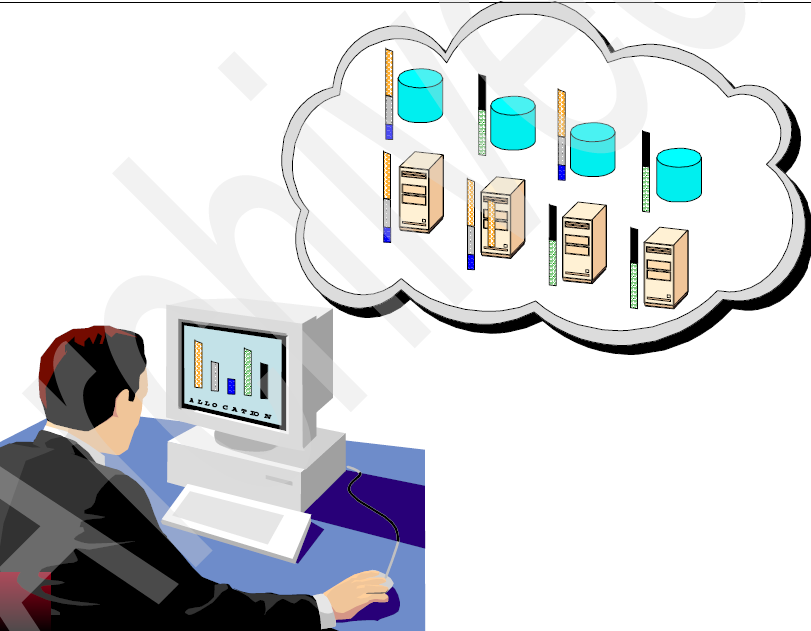
Administrators can adjust policies to better allocate resources