
Benefits of grid computing
5. Resource balancing
A grid federates a large number of resources contributed by individual machines into a large single-system image. For applications that are grid-enabled, the grid can offer a resource balancing effect by scheduling grid jobs on machines with low utilization, as illustrated in the next figure.
This feature can prove invaluable for handling occasional peak loads of activity in parts of a larger organization. This can happen in two ways:
· An unexpected peak can be routed to relatively idle machines in the grid.
· If the grid is already fully utilized, the lowest priority work being performed on the grid can be temporarily suspended or even cancelled and performed again later to make room for the higher priority work.
Without a grid infrastructure, such balancing decisions are difficult to prioritize and execute.
Occasionally, a project may suddenly rise in importance with a specific deadline. A grid cannot perform a miracle and achieve a deadline when it is already too close. However, if the size of the job is known, if it is a kind of job that can be sufficiently split into subjobs, and if enough resources are available after preempting lower-priority work, a grid can bring a very large amount of processing power to solve the problem.
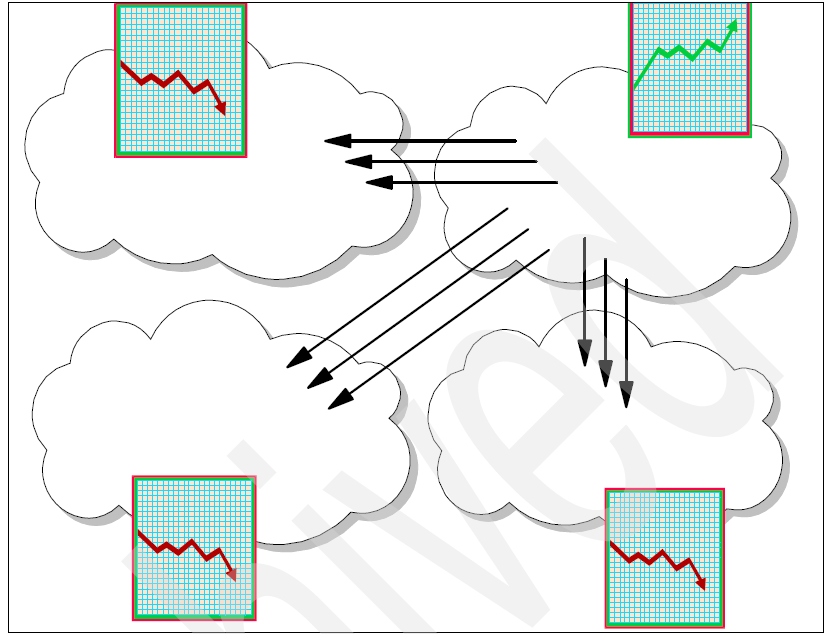
Jobs are migrated to less busy parts of the grid to balance loads
Other more subtle benefits can occur using a grid for load balancing. When jobs communicate with each other, the Internet, or with storage resources, an advanced scheduler could schedule them to minimize communications traffic or minimize the distance of the communications. This can potentially reduce communication and other forms of contention in the grid.
Finally, a grid provides excellent infrastructure for brokering resources. Individual resources can be profiled to determine their availability and their capacity, and this can be factored into scheduling on the grid. Depending on the accounting facilities in place, different organizations participating in the grid can build up grid credits and use them at times when they need additional resources. This can form the basis for grid accounting and the ability to more fairly distribute work
(and cost) on the grid.