
Search results: 57
Dear Students,
You are invited to this platform so that you can partake in online learning the Research Methodology module. Please note that it is important for each one of you to do all exercises and assignment and submit on time.
The following will be the facilitators:
Prof Bideri Ishuheri Nyamulinda (for Part One); Email: drnbideri@gmail.com; Mob Tel: 0788716140 and Dr Ndikubwimana Phillip (for Part Two); Email: ndiphil2000@gmail.com ; Mob Tel 0788615066
Learning outcomes
Having suceesfully completed this module, students should be able to:
Explain the nature marketing research
Explain the marketing process
Describe the marketing research sampling design
Explain the data collect and data analysis
General Introduction
This module is composed of two parts namely the theoretical part and the practical part that will require your participation in performing various practical activities.
Part One comprises of 7 topics including: An Introduction to Research Methodology, The Language of Research, Dimensions of Social Research, Research Design, Measurement, Sampling Design and Data Collection.
Part Two includes topics such as;………
1. Brief Course content
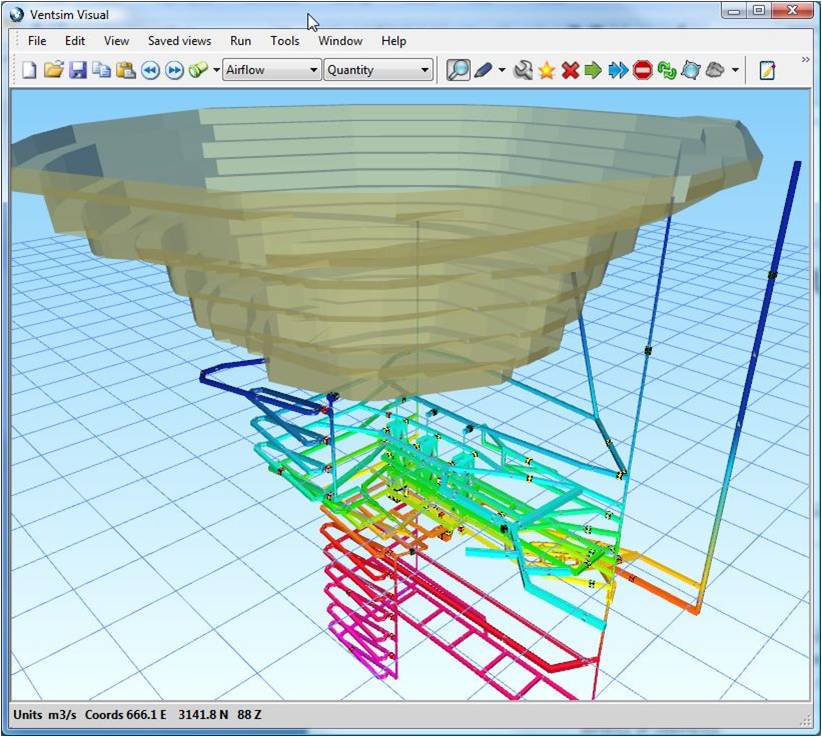
Mine ventilation planning
- Mine ventilation analysis
- controlling complex mine ventilation networks
So as to ensure the profitability and safety of the mine
2. Learning Outcomes
- On completion of this module, students should be able to:
- Demonstrate awareness of the legislative requirements for mine ventilation system
- Demonstrate practical skills necessary to undertake mine ventilation survey
- Design an appropriate mine ventilation system
Modeling will rely on information covered in Biostatistics I and Biostatistics II. The course provides a solid foundation in modeling including multiple linear regression, Multiple binary logistic regression, Poisson regression and survival analysis.
Courses will alternate between class sessions and practice sessions. Each class session will be three hours. Students should bring computers to class with Stata installed on the computers.
The module investigates concepts of functions of several variables, partial derivatives, multiple integrals, ordinary differential equations and partial differential equations. After completion of the module, the student teachers will be able to teach similar topics in TTCs or any other Secondary School. For more details, click here module description.

This module aims to equip the learner with the knowledge and skills in maternal physiology in order to manage the complexities and abnormalities of pregnancy, labor, and postpartum in reproductive processes, and pathological conditions of women, provision of comprehensive safe care to women.
Midwives provide high quality, culturally sensitive health services to all in the community in order to promote healthy family life and Manage complications as necessary.
The module aims at providing prospective teachers with basis on which to examine the various theories of educational psychology and their implications for teaching and learning. It encompasses main theories of learning, sensation and perception, memory, motivation, emotion, personality, attitude change and classroom management.
- Teacher: Dr. NDAGIJIMANA Jean Baptiste
- Teacher: Mr. BARAYAVUGA Jean-Leonard
- Teacher: Mr. Ali Kaleebaa
- Teacher: Dr Joseph Kubwimana
Welcome to the PES 1242 Module where you will discover the fundamental skills of Swimming, Athletics and Gymnastics.In Athletics the technique of racing, throwing and jumping will be explored. The module will help students to become familiar with basic techniques of floating, propulsion, legs kicks and arms movement in Swimming. Students will be taught the history of Gymnastics and discovered Gymnastics areas as well as basic gymnastics moves. This module is divided into 3 parts as described below:Part 1: ATHLETICS, Part 2: SWIMMING and Part 3: GYMNASTICS. Enjoy all teaching materials used like Videos, Photos, Notes,...
Module brief description of aims and content
This a 10 credits module aims at equipping learners with the necessary knowledge and skills for the safe administration of drugs. The module includes the main concepts of pharmacology, pharmacodynamics, pharmacokinetics drug preparation, drug calculation, storage of drugs, and drug classifications. Besides the basic concepts of pharmacology, drugs acting on the following systems will be covered notably: nervous (central/ peripheral/ autonomic); endocrine, reproductive, cardiovascular, renal, respiratory, gastrointestinal, chemotherapeutic agents, genitourinary system. Also, observing for desired effects, managing any adverse effect of drugs, providing appropriate health education and monitoring of drugs to patients across the lifespan.
MODULE NAME: PHARMACOLOGY
1. Module Code: MDW2154/NUS2155 School: NURSING AND MIDWIFERY
2. Module Title: PHARMACOLOGY
3. Year: 2 Semester: 1 Credits: 10
4. Year of presentation: 2022-2023 Administering School: SoNM
5. a. Core module (Yes or No): YES
5. b. Elective module (Yes or No): NO
5. c. Pre-requisite module(s): Anatomy and Physiology, Biochemistry, Fundamentals of Nursing.
5. d. Co-requisite module(s): NONE
5. e. Prohibited combinations: NONE
(See definitions in the General Academic Regulations)
Time frame: 5TH /6/2023-28TH/08/2023 (ie 12 weeks)
6. Allocation of study and teaching hours (See Notes of Guidance)
|
Descriptions |
Student hours |
Lecturer hours |
|
Total hours |
100 |
100 |
|
Lectures |
24 |
40 |
|
Seminars/workshops |
4 |
7 |
|
Practical classes/laboratory |
0 |
0 |
|
Structured exercises |
14 |
0 |
|
Set reading etc. |
10 |
10 |
|
Self-directed study |
30 |
0 |
|
Assignments – preparation and writing |
10 |
20 |
|
Examination – revision and attendance |
2 |
2 |
|
Marking and comments |
0 |
10 |
|
Feedback |
6 |
10 |
7.Module brief description of aims and content
This a 10 credits module aims at equipping learners with the necessary knowledge and skills for the safe administration of drugs. The module includes the main concepts of pharmacology, pharmacodynamics, pharmacokinetics drug preparation, drug calculation, storage of drugs, and drug classifications. Besides the basic concepts of pharmacology, drugs acting on the following systems will be covered notably: nervous (central/ peripheral/ autonomic); endocrine, reproductive, cardiovascular, renal, respiratory, gastrointestinal, chemotherapeutic agents, genitourinary system. Also, observing for desired effects, managing any adverse effect of drugs, providing appropriate health education and monitoring of drugs to patients across the lifespan.
1. Graduate Attributes &Learning Outcomes
- Knowledge & understanding
Having successfully completed this module, students should be able to demonstrate knowledge and understanding of:
A1. The principles of general and applied pharmacology
A2. The mechanisms of drugs such as pharmacokinetics, pharmacodynamics, and pharmacotherapeutics.
A3. Interactions of the various classes of drugs.
A4. Drugs commonly used in context of Rwanda health settings
B. Applied Knowledge, Understanding and Practice
At the end of this module, students should be able to:
B1. Apply the aseptic rules of drug administration in clinical setting.
B2. Monitor the adverse effects of drugs on clients of all ages.
B3. Categorize the classes of drugs acting on each body system
C. Communication/ICT/ numeracy/ analytical techniques/practical skills
At the end of this module, students should be able to:
C1. Calculate the dosages of drugs based on the age and body weight of patients.
C2. Administer correctly the drugs based on the rules of drug administration.
C3. Communicate to the client and family on self-drug administration (example: insulin drug)
C4. Communicate the sides effects to the health providers using ICT and other medical records.
C5. Analyze data from the client using ICT applications.
D. General Transferable Skills
a. Personal, Intellectual, and Professional Autonomy
Having successfully completed this module, students should be able to:
D1. Demonstrate the individual clinical reasoning and problem-solving skills to analyze the patient response to drugs administration.
b. Employability and career development
Having successfully completed this module, students will be able to:
D2. Update knowledge and skills regarding drugs calculation and administration through continuous professional training.
c. Global citizenship
Having successfully completed this module, students should be able to:
D3. Advocate the appropriate pharmacological interventions for getting effective care to all clients.
d. Lifelong learning
Having successfully completed this module, students should be able to:
D4. Implement the standardize protocol for safe administration of drugs to patients across the lifespan.
e. Collaboration, Teamwork and Leadership
Having successfully completed this module, students be able to:
D5. Collaborate with other health professional (pharmacists, doctors, nurses…) regarding drugs safety, prescription and administration.
f. Research, Creativity and Innovation, Scholarship and Enquiry
Having successfully completed this module, students be able to:
D6. Collect data on patients who developed adverse reactions caused by drugs administered.
g. Ethical, Social and Professional Understanding
Having successfully completed this module, students be able to:
D7. Keep confidentiality and privacy of patient/client throughout the prescriptions and administration of the drugs.
h. Financial literacy
Having successfully completed this module, students be able to:
D8. Demonstrate the ability to manage the sides effects caused by the drugs.
9.Indicative Content
Unit I.GENERAL PRINCIPLES IN PHARMACOLOGY
o Introduction to pharmacology
o Pharmacodynamics
o Pharmacokinetics
o Medication Safety
Unit II. APPLIED PHARMACOLOGY
PART ONE: Chemotheurapetic agents
Anti-infectives agents:
o Antibiotics
o Antifungal agents
o Antiprotozoal agents
o Antihelmintic Agents
o Antineoplastic agents
o Antiviral agents
PART TWO: Drugs acting on immune system and inflammation
o Anti inflamatories,antiarthritis and related agents.
o Vaccines
Part THREE: Drugs acting on the Respiratory system
o Drugs acting on the upper respiratory system
o Drugs acting on the lower respiratory system
Part FOUR: Drugs acting on the Gastrointestinal system
o Drugs affecting Gastrointestinal secretions
o Drugs affecting gastrointestinal motility
o Antiemetic agents.
PART FIVE: Drugs Acting on the Endocrine system
o Agents to control blood glucose levels
o Hypothalamic and pituitary agents
o Adrenocortical agents
o Thyroid and parathyroid agents
PART SIX: Drugs Acting on the Reproductive System
o Drugs Affecting female reproductive system
o Drugs affecting Male reproductive system
o Pharmacology used in midwifery
PART SEVEN: Drugs Acting on the Cardiovascular system
o Drugs affecting blood pressure
o Antiarthythmic agents
o Antianginal agents
o Lipid lowering agents
o Drugs affecting blood coagulation
o Drugs used to treat anemia
PART EIGHT: Drugs Acting on the Renal System
o Diuretic agents
o Drugs affecting the urinary tract and the bladder
Part NINE: Drugs Acting on the Central and peripheral Nervous system.
o Anxiolytic agents
o Antidepressant agents
o Psychotheurapetic agents
o Anti seizure agents
o Antiparkinsonism agents
o Muscle relaxants
o Narcotics,Narcotic antagonists,and antimigraine agents
o General and local anesthetic agents
PART TEN: Drugs acting on the Autonomic Nervous system
Adrenergic agonists
o Adrenergic blocking antagonists
o Cholinergic agonists
o Anticholinergic agents
PART ELEVEN: Other agents
o Parenteral agents-IV fluids
o Topical agents
o Ophthalmic agents
o Vitamins
10.Learning and Teaching Strategy
Teaching and learning strategies will include interactive lectures, audio-visual, role play, storytelling, case based education, problem based learning, case studies, brainstorming, discussion boards, peer partner learning, and reflective journaling among others.
11.Assessment Strategy
Formative and summative assessments will be used to monitor achievement of learning outcomes. Students will be assessed formatively during in-course assessment (CAT) within lectures and through assignments. The summative assessment will be done through Continuous and Final assessments.
12. Assessment Pattern
|
Component |
Weight (%) |
Learning outcomes |
|
In-course assessment: |
50% |
A1-A3, B1-B2, C1, D1-8. |
|
Final Exam written paper |
50% |
ALL |
13. Strategy for feedback and student support during module
Learners will be offered the opportunity to meet with their lecturers at mutually convenient times throughout the module. An online communication social networking mechanism, (for example: email, LinkedIn, Moodle, twitter, or group Facebook), will be used to allow both one-on-one and group feedback and support. Additionally, formative and continuous assessment will be used to gauge learners’ progress, with timely distribution of results to learners. Faculty will monitor individual learner progress throughout the duration of the module.
14. ASSIGNMENT SUMMARRY.
|
IN-COURSE ASSESSMENTS |
50% of total grade |
|
FINAL EXAM |
50 % of total grade |
I. GROUP ASSISGNMENT : 20% OF TOTAL GRADE
II. INDIVIDUAL CAT : 30 % OF TOTAL GRADE
15. Indicative Resources
14. Indicative Resources
Core Text (include number in library or URL) (inc ISBN)
1. Lilley LL, Collins SR, Snyder JS. Pharmacology and the nursing process E-Book.
Elsevier health sciences; 2022 Jan 19.
2. Barber P, Robertson D. Essentials of Pharmacology for Nurses, 4e. McGraw-Hill
Education (UK); 2020 May 15.
3. Ernstmeyer, K. and Christman, E. (Eds.). (2020). Open RN Nursing Pharmacology by Chippewa Valley Technical College licensed under CC BY 4.0.
4. Satoskar RS, Bhandarkar SD. Pharmacology and pharmacotherapeutics.
Elsevier India; 2020 Jul 10. 26 TH edition, ISBN:978-81-312-5695-411
5. Willihnganz MJ, Gurevitz SL, Clayton BD. Study Guide for Clayton's Basic
Pharmacology for Nurses-E-Book. Elsevier Health Sciences; 2021 Nov 27.
6. Journals
Key websites and on-line resources
Go in your browser and open; elearning.ur.ac.rw
16. Please add anything else you think is important
Teaching/Technical Assistance: Projectors, flipcharts, chalks, computers, laptops, internet connection, etc
Laboratory space and equipment: gloves, videos, trolley, syringes, needles, checklists, flipcharts, markers, etc
Computer requirements: WIFI, Cables,
Others: N/A
17.Module facilitators
HABYARIMANA Emmanuel (ML), haemmanu@gmail.com , Tel:0788214040
MUKANOHELI Vestine,noelvest88@yahoo.fr,
DANGER Florian,baflorian@yahoo.fr
Contact Innocent, contact innocent@gmail.com
SAFARI Emerthe, emerthe82@gmail.com
EVERYTHING Pauline, kabapaulin08@gmail.com
MUKESHIMANA Eugenie, eugmukesha@gmail.com
UMUKUNZI Alice, alimukunzi@gmail.com
The Module of Principles of Good Governance, Human Rights and Sustainable Development is an elective module taught in the LLM Program on International Criminal Justice and the Law of Human Rights.
It has the following objectives:
· To explain the general and specific linkages between Good Governance, Human Rights and Sustainable Development
· To analyse the scope and content of the different human rights, their relevance to sustainable development and the role of principles of good governance.
· To discuss the interrelationships between good governance, sustainable development and the enjoyment of human rights.
· To explore why and how implementing different principles of good governance and implementation of sustainable development goals are relevant to a successful respect of human rights.
Principles of Good Governance, Human Rights and Sustainable Development.
Management of public Ressources necessity a strong financial accounting system clears PFM policies as well as skilled accountants. A better understanding of public sector accounting theories; financial reporting process and practice will be acquired through conceptual skills; analytical skills .8 chapters will be covered and equipped students with an entire view of similarities and dissimilarity of accounting practices in public sector vs. private sectors.
COURSE CONTENT
Chapter 1: Overview Of Public Sector Accounting
Chapter2: Public Financial Management
Chapter 3: Government Revenue And Recordings Of Government Transactions
Chapeter 4: Financial Reporting Requirements For Public Sector Organizations
Chapter 5: State Budget
Chapter 6 : Overview Of International Public Sector Accounting Standards Ipsas
Chapter 7: Accounting For Non Profit Making Organizations
Chapter 8: Investment Appraisal In Public Sector (Government Projects)
READINGS GUIDE
RAZEK, J. R. (2004). Introduction to Government and Non-for-Profit Accounting. PEARSON.
Bergmann, A. (2009). Public Sector Financial Accounting. Prentice Hall
MINECOFIN (2011). Simplified Public Financial guidelines for Chief Budget Managers. Rwanda
NUMBER OF CREDITS: 15 CREDIT-72HOURS
- Teacher: Yvette MWIZA
- Teacher: MPONIMPA Claude
Since the University of Rwanda has embarked on the move to adopt the blended learning mode in teaching, learning and assessment approach, there has been seamless effort in order to upload modules on the UR eLearning platform. However, it was observed that there is a need to improve their quality by adopting a common blended learning module template where they meet the quality assurance standards for Open and Distance eLearning ( ODeL).
It is against this backdrop that the University of Rwanda has organized, at all Campuses, a series of Training Workshops for all its academic staff on Accelerated Uploading of Modules on UR eLearning Platform.
This module was designed to offer guides to all required elements in a given module.
Since the University of Rwanda has embarked on the move to adopt the blended learning mode in teaching, learning and assessment approach, there has been seamless effort in order to upload modules on the UR eLearning platform. However , it was observed that there a big change to be done .
Dear Students Welcome to this course of SOE4261: Environmental Management!
This course is for Civil Engineering students and it aims to provide an understanding of the importance of Environmental management tools in the project /program designs and implementation. It provides a clear understanding of the linkages between Environment & Development, understanding of EIA, EA, SEA and builds confidence with their applications and limitations. The module helps to integrate environmental protection measures in deferent projects/programs before their implementation.
The module deals with basic principles to integrate environmental protection measures in deferent projects/programs before their implementation. It introduces to students a description of Environmental Impact Assessment, project-based risk management, environmental management in an organization, environmental risk considerations in policymaking, risk communication, and sources of legal regulation of environmental problems.
Dear students, be motivated and engage all your motives in this course. At the end of this module, you will be able to:
1. Describe the basics and importance of Environmental Impact Assessment;
2. Assess environmental impacts of anthropogenic activities through the EIA process;
3. Conduct the Strategic Impact Assessment on policies, plans, or programs;
4. Integrate the international treaties, conventions, national policies, laws, and standards in environmental protection;
5. Conduct environmental auditing for measuring the effects of certain activities on the environment
Lecturer(s):
Dr. Télesphore Kabera, Email: elearning.unirwanda2@gmail.com
Mr. Elisée Gashugi, Email: eliseeg@yahoo.fr
Mr. Jean Claude Safari, Email: safajeco2008@gmail.com
Mr. Joseph Hahirwabasenga, Email: josephhahirwa@gmail.com
Mr. Remy Patrick Tumwizere, Email: remick055@gmail.com

Welcome message
Dear students,
welcome to the module of SSC 3122: Land Survey and Management. This This is a module taken in the first trimester of year three of the BSc in soil sciences. This module has the following 3 components: Land use planning and Management, Topography & Cartography
Brief description of aims and content
Aim: This module will help the students to acquire knowledge needed to land management
Content: Land use planning and Management, Topography & Cartography
Learning Outcomes
Knowledge and Understanding
Students will understand principles of land use and its principles to classify
Students will be able to interactive effects of land degradation du to inappropriate land use
Communication/ICT/Numeracy/Analytic Techniques/Practical Skills
Students will be able to measure, record, analyse and interpret erosion factors, natural and anthropogenic, in order to assess resources depletion/degradation in order to plan proper land use and soil erosion control
General transferable skills
Students will be able to diagnose soil erosion processes, assess impacts, design and implement appropriate soil and water conservation measures. They will also be capable of evaluating effectiveness of soil conservation measures applied
Activities:
- Provision of reading materials and
- Assignments to the students in small group
Indicative resources
- BOUDEVILLES , J., " L’aménagement du territoire" in Encyclopédie Universalis, Paris, 1992, pp. 47-55
- TRIBILLON, J-F., Villes africaines, Nouveau manuel d’Aménagement foncier, Ed. Adef, Paris, 1992.
- Population Reference Bureau, Fiche des données sur la population mondiale, New-York, 2004.
- Ministère de l’Environnement, Différents rapports de séminaires sur l’environnement
- GAPUSI, J., Analyse et identification des stratégies pour la protection de la Biodiversité dans la forêt de Nyungwe, étude de consultance inédite, Butare, 1999.
- UNESCO., " Concepts de base de l’éducation environnementale"in Connexion, Bulletin relative à l’environnement UNESCO-PNUE, Vol. XV, n°2, Juin 1990.
- MINECOFIN., Données du 3e RGPH, Synthèse des analyses des données sur l’ Habitat et son Environnement, Kigali, 2005
- BRUNEL, S., L’Afrique, un continent en réserve du développement, éd. Bréal, Paris, 2004
- MALDAGUE, M et MATUKA K., Actes du séminaire sur l’Environnement et le Développement durable, Brazzaville, 1989.
- GRATALOUP, A-M.G., Précis de Géographie, éd. Nathan, Paris, 1995.
- PINCHEMEL, G., La face de la terre, 5e édition, A. Colin, Paris, 1997.
- SERVEN, P et al., La Géographie du Rwanda, édition de Boeck, Bruxelles, 1974.
- Dictionnaire le Petit ROBERT, Paris, 1993.
- Ministère de l’Environnement, Agenda 21 National, Kigali, 1993
- ANDRÉ, P., L’évaluation des impacts sur l’environnement, Processus, acteurs et pratique pour un développement durable, 2e édition, Presse International, Québec, 2003.
- ELAME, E., Géographie du développement durable, Ed. Economica, Paris, 2002
- BRUNEL, S., Le développement durable, Collection Que sais-je ? éd, PUF, Paris, 2005
- VANSINA, J., Le Rwanda ancien, le royaume nyiginya, éd. Karthala, Paris, 2001
Lecturers contact
Dr. BAZIMENYERA Jean de Dieu, 0785375898
Nsanzumuhire Frodouald, 0784090305
Habimana Aloys, 0788468284
This module will help the students to acquire knowledge needed to land management, Land use planning and Management, Topography & Cartography
Welcome message
Dear students, welcome to the module of SSC 4221: agricultural extension:
This is a module delivered to year 4 students in the BSc. Soil Sciences Program at University of Rwanda College of Agriculture Animal Sciences and Veterinary Medicine.
Aim of the module
The module of Agricultural Extension and policies aims to equip the students about the technology transfer skills and strategies; Rwandan agricultural policies laws; natural resources management law and policies; institutional framework for extension. Students will be taught principles, concepts, philosophy, methods of extension, communication skills needed for agricultural innovations, interpersonal communication skills, Agricultural & Natural Resources Management Policies & Laws. Students are encouraged to attend lectures and field classes, if the situations permit. Course notes for lectures are made available through UR e-learning platform https://elearning.ur.ac.rw. Students are encouraged to participate in class by asking questions or providing appropriate comments from their own experiences that will add to the learning experience of all students. Students are expected to complete assignments on due time. Lectures are presented with the assistance of reading materials. If time allows informal small groups will be used to discuss issues raised in class. The questions and comments from the students are highly encouraged.
Learning outcomes
This module will help the students to:
-Show ability to understand farmer behaviour towards changing agricultural technology.
-Student should also be able to critically analyse agricultural policies and understand how these support agricultural development.
- Identify challenges of agricultural development and know how to address them using participatory approaches.
- Execute extension work and to commit themselves to the community service
- Develop small scale projects and generate farmers interest in these projects using the participatory approach.
- Show capability in natural resources management.
- understand challenges and possible solutions for agricultural development
- understand concepts and theories of extension and existing agricultural policies
Activities
Online lectures
Assignments
Exercises
Resources
- André, C.E., Reveret, J.P. et Sène, A. (2003)., L’Évaluation des impacts sur l’environnement: Processus, acteurs et pratique, Presses internationals Polytechnique, Montréal.
-Ellis, F. (1991). Agricultural Policies in Developing countries. Cambridge University Press
- Hannigan, J. (2006)., Environmental Sociology, Routledge, London.
- Journals: "Loi Organique portant modalités de protéger, sauvegarder et promouvoir l’environnement au Rwanda" in Journal Officiel n° 04/2005 du 08/04/2005
- Leeuwis, C., (2004) COMMUNICATION heart FARMING INNOVATION, rethinking, Agricultural Extension. Blackwell publishing, NL,
- MINAGRI, (2005), NATIONAL POLICY AND LEADING PRINCIPLES OF THE NEW AGRICULTURAL EXTENSION SYSTEM, Kigali, Rwanda.
- MINAGRI (2009). NATIONAL AGRICULTURAL EXTENSION STRATEGY, P.53, Kigali, Rwanda.
-Monke, E. A. and Scott R. P. (1989). The Policy Analysis Matrix for Agricultural Development. Cornell University Press.
- Nettie, Aarnink and Koos, Kingma (1991). Female Farmers and Male Extension Workers. Coll. Women and autonomy Centre, Ed. Leiden University, p. 137, NL.
-Norton, R. D. (2002). Agricultural Development Policy: Concepts and Experiences. FAO Agricultural Policy Support Service – Policy Assistance Division. TCAS Working Document No. 43.
- Van den Proclamation, A.W. & Hawkins, H.S. (1996), Agricultural Extension, 2nd ed., Blackwell, Ltd sciences, London, UK.
Teaching team:
Dr. Bazimenyera Jean de Dieu, 0785375898, bazidieu@gmail.com
Dr. Harelimana Anastase, 0788564493, anastaseharel@gmail.com
welcome message
Dear students welcome to the module of SSC4223 : Research project II
This module is delivered to year 4 students in the BSc. Soil Sciences Program at University of Rwanda College of Agriculture Animal Sciences and Veterinary Medicine.
Aims
The overall objective of the module is to train students in choosing the right research topic, writing and presenting the research proposal, performing data collection and analysis, and finally writing and presenting the study report (thesis). During this process, the student is expected to work with minimal assistance from the supervisor.
Learning outcomes:
After successful completion of this module students are expected to be able to:
-
Lay out scientifically sound field and laboratory agronomic and soil science experiments
-
record analyse and report experimental data
- Write a research proposal;
- Design experiments and Test hypothesis;
- Set up and carry out laboratory experimentation;
- Apply statistical packages in data management and analysis;
- Write and present a scientific report.
Activities:
- Research proposal writing: Assisted by their supervisors, student are expected to develop a well structured research proposal, with clear and logical arrangement of ideas addressing the aspects such as the background and context of the stud
- Data collection: This part of the research project concerns the student’s field and laboratory work.
- Data analysis, report writing & and defense of the final research work: After the data collection, students should be able to perform appropriate statistical tests using at least one of available statistical packages. Finally, they should write a report (thesis) which will be presented before a panel for evaluation.
Literature:
- Helen Aveyard (2018) Doing a Literature Review in Health and Social Care: A practical guide, Fourth Edition, Open University Press, London, McGraw Hill Education.
- Read textbooks, published papers and scientific materials on designing of research proposal, conduction of experiments and writing of final scientific report. These can also be accessed through the University of Rwanda Library website: https://library.ur.ac.rw/
- The Learning and teaching strategy, assessment strategy, and literature are provided under each learning unit and in the module outline.
- Language of Instruction: English
Module Team:
Prof Naramabuye FX
Dr Hamudu Rukangantambara
Dr Bazimenyera Jean de Dieu
Gatesi Julienne
Nsanzimana Oreste
Module coordinator
Nsanzimana Oreste, 0788664238
The content of this module will provide students with knowledge and understanding of concepts of economic growth, economic development, underdevelopment, sustainable development, Chenery’s patterns of structural change, characteristics of modern economic growth, different theories of economic development & models of growth; development process and strategies, role of agriculture and industry in economic development and development process and strategies in Rwanda.
Background Colour
Font Face
Font Kerning
Font Size
Image Visibility
Letter Spacing
Line Height
Link Highlight
Text Alignment
Text Colour