Resources for unit 2
3. Concept of Education
3.1. Forms of Education
Education occurs in three main forms:
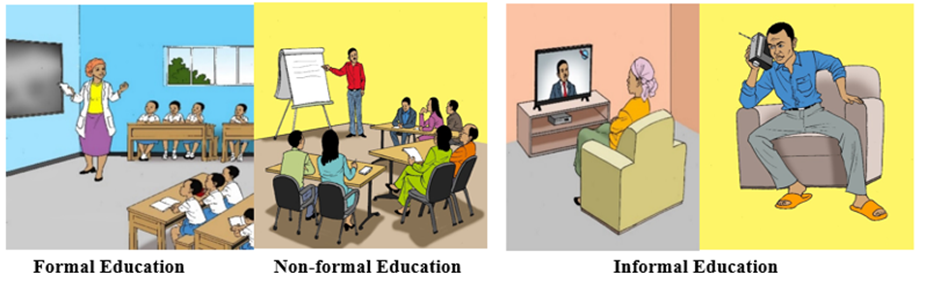
A. Formal Education
Formal education is both structured and regular, typically provided in schools, colleges, universities, or professional training centers. It follows a well-organized curriculum designed to meet specific educational goals and is usually divided into stages such as early childhood, primary, secondary, and higher education. Normally, formal education is delivered by certified teachers who possess professional qualifications and adhere to pedagogical standards. It includes formal assessments such as exams, quizzes, and projects that are standardized and contribute to students’ academic qualifications. Regulated by governmental or accreditation bodies, formal education ensures institutions meet specific standards and usually leads to recognized certifications such as diplomas or degrees as a formal recognition of their achievements.
B. Non-formal Education
Non-formal education is structured but not regular, occurring outside the traditional school system in settings such as workshops, training programs, seminars, conferences. It is designed to meet specific needs such as vocational skills, personal development, or lifelong learning. Unlike formal education, non-formal education does not follow a rigid curriculum and can be customized to suit the goals of participants.
It is normally voluntary; learners choose to participate based on their interests or needs. The content varies widely, focusing on practical skills or knowledge not typically covered in formal schooling. It often focuses on specific practical skills, personal development, or knowledge that may not be covered in formal education: vocational training, adult literacy programs, life skills courses, or hobby-based workshops.
It can take many forms, such as workshops, seminars, community learning circles, online courses, internships, apprenticeships, or even learning through social activities. It may offer certificates of completion or informal recognition of achievement, generally do not grant academic degrees or qualifications in the same way formal education does. The focus is often on personal or professional development rather than formal certification. Non form education is seen as essential for lifelong learning, bridging gaps left by formal education and addressing community or societal needs.
Both formal and non-formal education fall under hetero-education which means education guided by others as opposed to auto-education or self-directed education or education by oneself.
C. Informal Education
Informal education is both non-structured and non-regular, lacking a fixed curriculum or standardized learning pathway. It naturally emerges from daily experiences and activities occurring outside formal classroom settings and within everyday life.
This type of learning is acquired through personal reading, interpersonal relationships, life events, family interactions, community involvement, observation, and self-directed study. It is typically spontaneous and driven by the learner’s curiosity, motivation, and interests, making it highly adaptable to individual needs and circumstances rather than being guided by a predetermined educational framework.