
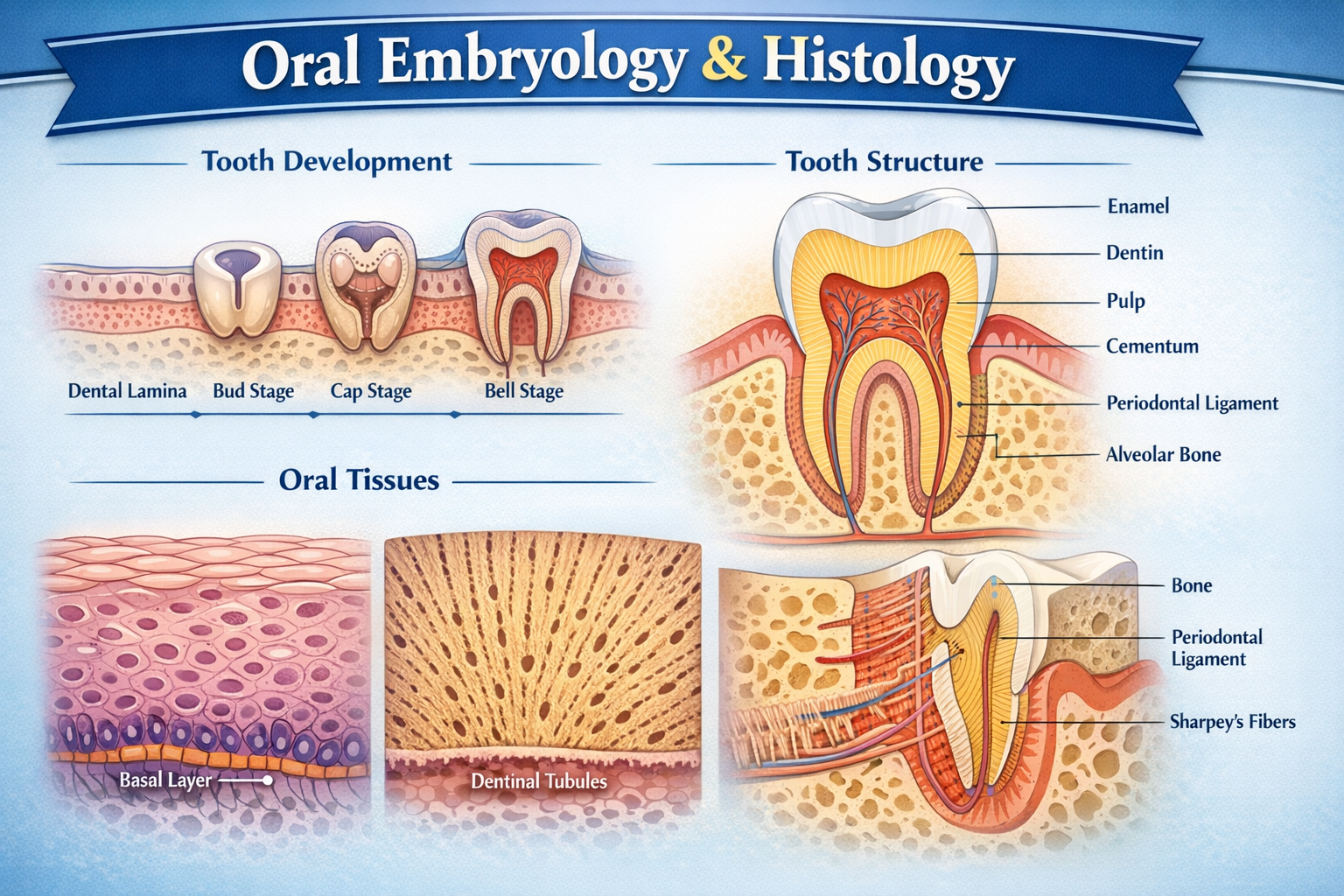
Module aims and content
This is a combined module that aims at equipping the students with the knowledge of the normal and abnormal formation, development as well as the normal microscopic appearance of the different head, face and oral cavity tissues and organs. The students shall be able to relate the developmental and histological structure of the tissues and organs to their function, disease and medical research.
Course Description
General Microbiology is an introductory course that explores the biology of microorganisms, including bacteria, viruses, fungi, protozoa, and algae. The course focuses on the structure, physiology, genetics, metabolism, and ecological roles of microorganisms, as well as their interactions with humans, animals, plants, and the environment.
Students will learn fundamental microbiological techniques used for the isolation, cultivation, identification, and characterization of microorganisms. The course also introduces key concepts such as microbial growth, microbial genetics, microbial metabolism, host–microbe interactions, antimicrobial agents, and the role of microorganisms in health, disease, biotechnology, and environmental processes.
Laboratory sessions provide hands-on experience with basic microbiological methods including aseptic techniques, staining methods, microscopy, microbial culture, biochemical testing, and interpretation of microbiological data.
By the end of the course, students will understand the diversity of microorganisms and their importance in medicine, agriculture, industry, and environmental sustainability.
Learning Objectives:
-
Understand the diversity and classification of microorganisms.
-
Describe microbial cell structure and function.
-
Explain microbial metabolism, growth, and genetics.
-
Apply basic microbiological laboratory techniques.
-
Recognize the role of microorganisms in infectious diseases and public health.
-
Understand beneficial applications of microorganisms in biotechnology and environmental processes.